Working for yourself offers unparalleled freedom, flexibility, and financial control over your career. However, transitioning away from traditional corporate benefits means you are fully responsible for securing your own healthcare safety net. For freelancers, gig workers, sole proprietors, and small business owners, navigating the market to find private health insurance for self-employed professionals can feel overwhelming.
Without an HR department to handle benefits, finding high-quality health insurance for freelancers requires a strategic approach. Fortunately, the commercial market offers versatile private health insurance options tailored specifically for independent workers.
In this comprehensive 2026 guide, we will break down how to find private health insurance for self-employed workers, compare plan networks (PPO vs. HMO), explain how to maximize your self-employed health insurance tax deduction, and secure affordable health insurance for independent contractors without sacrificing coverage quality.

Finding private health insurance for self-employed freelancers involves choosing flexible PPO networks and utilizing tax deductions.
🎯 [SELF-EMPLOYED QUOTE ENGINE] Protecting Your Independent Career
Don’t let medical bills disrupt your business cash flow. Enter your ZIP code to compare flexible private health insurance options and check instant rates tailored for self-employed pros.
👉 Explore Private Health Insurance for Self-Employed Options on InsuranceQuote.cloud
💡 What Is Private Health Insurance for Self-Employed Workers?
Private health insurance for self-employed individuals refers to medical coverage policies purchased directly from commercial insurance carriers rather than government-sponsored programs like Medicaid or Medicare.
When searching for the best private health insurance coverage, independent workers typically evaluate two primary pathways:
ACA Off-Marketplace Private Plans: Comprehensive major medical coverage sold directly by commercial insurance companies. These plans meet all Affordable Care Act standards, covering pre-existing conditions and essential health benefits without relying on federal subsidies.
Individual & Sole Proprietor Health Plans: Customized private health insurance options designed for freelancers or business owners who need flexible doctor choices across multiple regions.
🏛️ PPO vs. HMO: Finding the Best Private Health Insurance Coverage
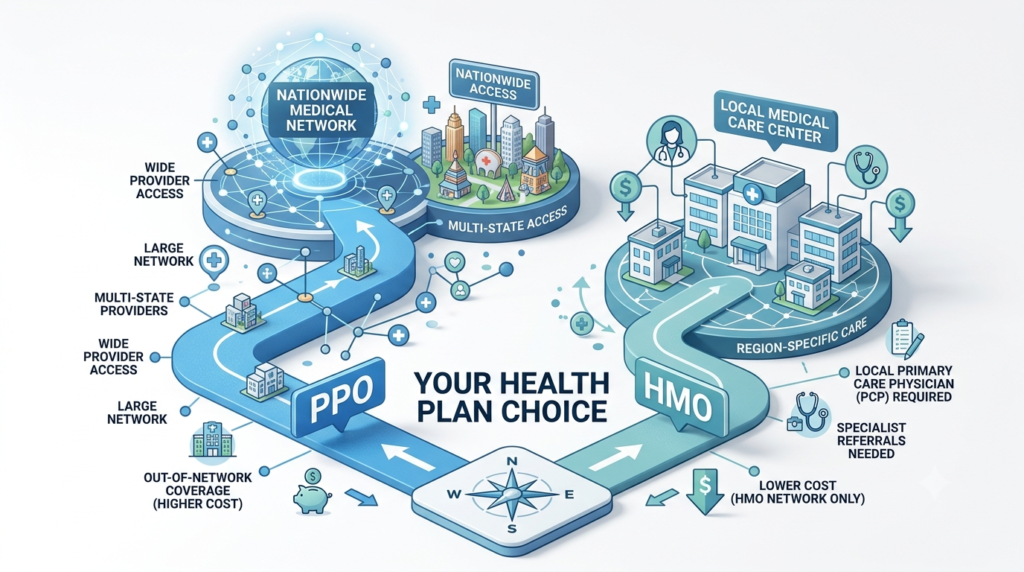
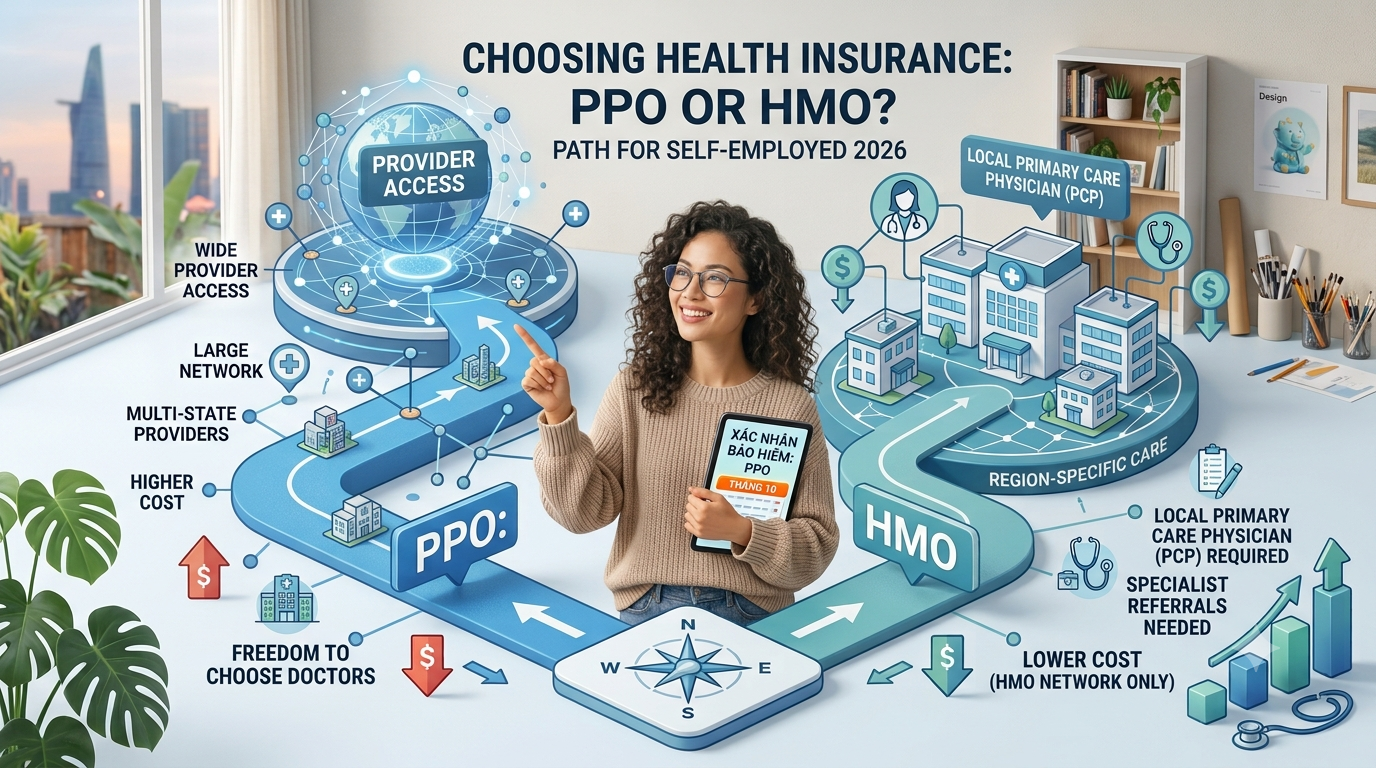
A critical decision when shopping for private health insurance for self-employed professionals is choosing between a Preferred Provider Organization (PPO) and a Health Maintenance Organization (HMO).
Because many freelancers travel or work with remote clients, obtaining PPO private health insurance plans is often a top priority.
Network Feature
PPO Private Health Insurance Plans
HMO Private Health Insurance Plans
Out-of-Network Access
Yes (Covered at a higher copay rate)
No (Only emergency care covered out-of-network)
Primary Care Physician (PCP)
Not Required
Required (Must select a primary care doctor)
Specialist Referrals
No Referral Needed (Direct access to specialists)
Referral Required from your primary doctor
Monthly Premium Cost
Moderate to High
Lower Monthly Premium
Ideal Candidate
Freelancers needing flexible doctor networks
Cost-conscious pros working in one local area
🎯 [PPO NETWORK TOOL] Looking for Nationwide Doctor Choice?
Compare top-rated PPO private health insurance plans side-by-side with budget-friendly HMO options in your ZIP code in under 2 minutes.
👉 Compare PPO & HMO Private Health Insurance Options on InsuranceQuote.cloud
Comparing PPO private health insurance plans with HMO coverage helps freelancers choose between doctor flexibility and lower monthly premiums.
💰 How to Maximize the Self-Employed Health Insurance Tax Deduction
A major financial advantage of enrolling in private health insurance for self-employed workers is the specialized IRS tax benefit known as the self-employed health insurance tax deduction.
Under IRS guidelines (Schedule 1 of Form 1040), qualifying self-employed workers can deduct up to 100% of their health insurance premiums directly from their gross income.
Crucial Tax Rules for Health Insurance for Freelancers:
Above-the-Line Tax Deduction: You do not need to itemize deductions to claim this benefit. It directly lowers your overall Adjusted Gross Income (AGI).
Family Coverage Inclusion: The self-employed health insurance tax deduction covers medical, dental, and qualifying long-term care insurance premiums for you, your spouse, and your dependents.
Net Income Limit: The total deduction claimed cannot exceed the net income earned by your self-employed business.
Employer Plan Disqualification: You cannot claim this deduction for any month you were eligible to join an employer-sponsored health plan (including through a spouse’s employer).
🛡️ Types of Private Health Insurance Options for Independent Workers
Finding affordable health insurance for independent contractors requires understanding the different policy types available in the commercial market:
1. Major Medical Private Insurance (ACA-Compliant)
Overview: Comprehensive private health insurance options providing full protection for pre-existing medical conditions, hospital stays, prescription drugs, and preventive care.
Pros: Complete medical security with no annual financial spending limits.
Cons: Higher monthly costs if you do not qualify for marketplace subsidies.
2. High-Deductible Health Plans (HDHP) Paired with an HSA
Overview: A high-deductible private plan paired with a tax-advantaged Health Savings Account (HSA).
Pros: HSA contributions are 100% tax-deductible, grow tax-free, and can be withdrawn tax-free for qualified medical expenses.
Cons: Higher out-of-pocket spending before insurance coverage kicks in.
3. Short-Term Private Health Insurance
Overview: Temporary coverage designed to bridge brief benefit gaps (e.g., between client contracts or business transitions).
Pros: Very low monthly premiums and fast application approval.
Cons: Excludes pre-existing conditions and does not offer guaranteed essential health benefits.
Combining an HSA-qualified health plan with the self-employed health insurance tax deduction optimizes savings for independent contractors.
📝 4 Steps to Secure the Best Private Health Insurance Coverage
Follow these four practical steps to choose the best private health insurance coverage for your independent career:
Step 1: Calculate Your Net Business Income
Determine your expected annual net self-employment earnings. This step helps calculate your potential tax savings via the self-employed health insurance tax deduction.
Step 2: Identify Essential Medical & Prescription Needs
List your non-negotiable health requirements:
Do you take brand-name prescription drugs regularly?
Do you require multi-state doctor access via PPO private health insurance plans?
How often do you visit medical specialists?
Step 3: Evaluate Total Out-of-Pocket Risk
Look beyond monthly premiums. Evaluate the deductible, coinsurance percentage, and out-of-pocket maximum. Selecting a plan with a low premium might cost more overall if an unexpected illness triggers a high deductible.
Step 4: Use a Unified Online Insurance Quote Tool
Instead of calling multiple insurance agents, use an online quote aggregator to compare affordable health insurance for independent contractors from major carriers in real-time.
❓ Frequently Asked Questions (FAQs)
Q1: Can I get private health insurance for self-employed workers if I have no employees?
Yes! As a freelancer, sole proprietor, or independent contractor, you fully qualify for individual private health insurance options. If you employ at least one full-time equivalent worker (who is not a spouse), you may also explore small business group health plans.
Q2: Is private health insurance for freelancers more expensive than ACA plans?
If your income is higher and you do not qualify for ACA subsidies, private health insurance options off the marketplace offer competitive pricing with broader doctor networks (such as nationwide PPOs). However, if your income qualifies for subsidies, ACA marketplace plans generally cost less out-of-pocket.
Q3: Can I claim the self-employed health insurance tax deduction if my business loses money?
No. The self-employed health insurance tax deduction cannot exceed your net self-employment earnings. If your business reports a net operating loss for the tax year, you cannot claim this specific above-the-line deduction for that year.
Q4: Are pre-existing medical conditions covered under private plans?
All ACA-compliant major medical plans are legally required to cover pre-existing conditions without charging higher rates. However, non-ACA options (such as short-term policies) may exclude pre-existing health conditions.
🏁 Conclusion: Protect Your Business and Health Today
As an independent professional, your physical health is your most valuable business asset. Selecting the right private health insurance for self-employed workers protects your personal well-being, safeguards your business cash flow from unexpected medical bills, and unlocks valuable tax deductions.
Take control of your healthcare coverage today. Compare tailored private health insurance options designed specifically for your independent budget.
👉 Get Your Custom Quote for Private Health Insurance for Self-Employed Workers on InsuranceQuote.cloud