
Navigating the United States healthcare system can often feel overwhelming, complex, and financially stressful. With medical care costs rising annually, securing adequate health coverage is no longer just a recommendation—it is a vital financial safety net for you and your family.9
Fortunately, the Affordable Care Act (ACA), commonly referred to as Obamacare, offers millions of Americans access to comprehensive, reliable health insurance at significantly discounted rates through federal subsidies. Whether you are transitioning between jobs, working as a freelancer, or simply looking for lower monthly premiums, understanding how to find ACA health insurance with subsidies can save you thousands of dollars each year.
In this ultimate 2026 guide, we will break down how ACA subsidies work, explain federal poverty guidelines, compare plan tiers, and walk you through the step-by-step process of finding maximum coverage at the lowest possible out-of-pocket cost.
💡 What Are ACA Health Insurance Subsidies and How Do They Work?
Under the Affordable Care Act, the federal government provides financial assistance to help individuals and families pay for health insurance obtained through the Health Insurance Marketplace. These financial aids are broadly classified into two main types of subsidies:
1. Premium Tax Credits (PTCs)
Premium Tax Credits directly lower your monthly health insurance payments (premiums). When you apply for Marketplace coverage, your estimated annual income determines the credit amount you qualify for. You can choose to apply these credits directly to your monthly bill—lowering what you pay out-of-pocket each month—or claim them when filing your federal tax return.
2. Cost-Sharing Reductions (CSRs)
While Premium Tax Credits reduce your monthly bill, Cost-Sharing Reductions lower the amount you pay when you actually receive medical care. CSRs reduce your deductible, copayments, and coinsurance amounts, as well as your annual out-of-pocket maximum limit.
Important Note: Cost-Sharing Reductions are exclusively available to individuals who enroll in a Silver-tier Marketplace plan and meet specific household income requirements.
🎯 [RECOMMENDED TOOL] Calculate Your ACA Subsidy & Save Big Today
Don’t overpay for your healthcare coverage. Enter your ZIP code and household income to see exact subsidy estimates and discover all available plans in your area within minutes.
👉 Calculate Your ACA Subsidy & Compare Real-Time Rates on InsuranceQuote.cloud
📊 Do You Qualify for ACA Subsidies? (Income Guidelines)
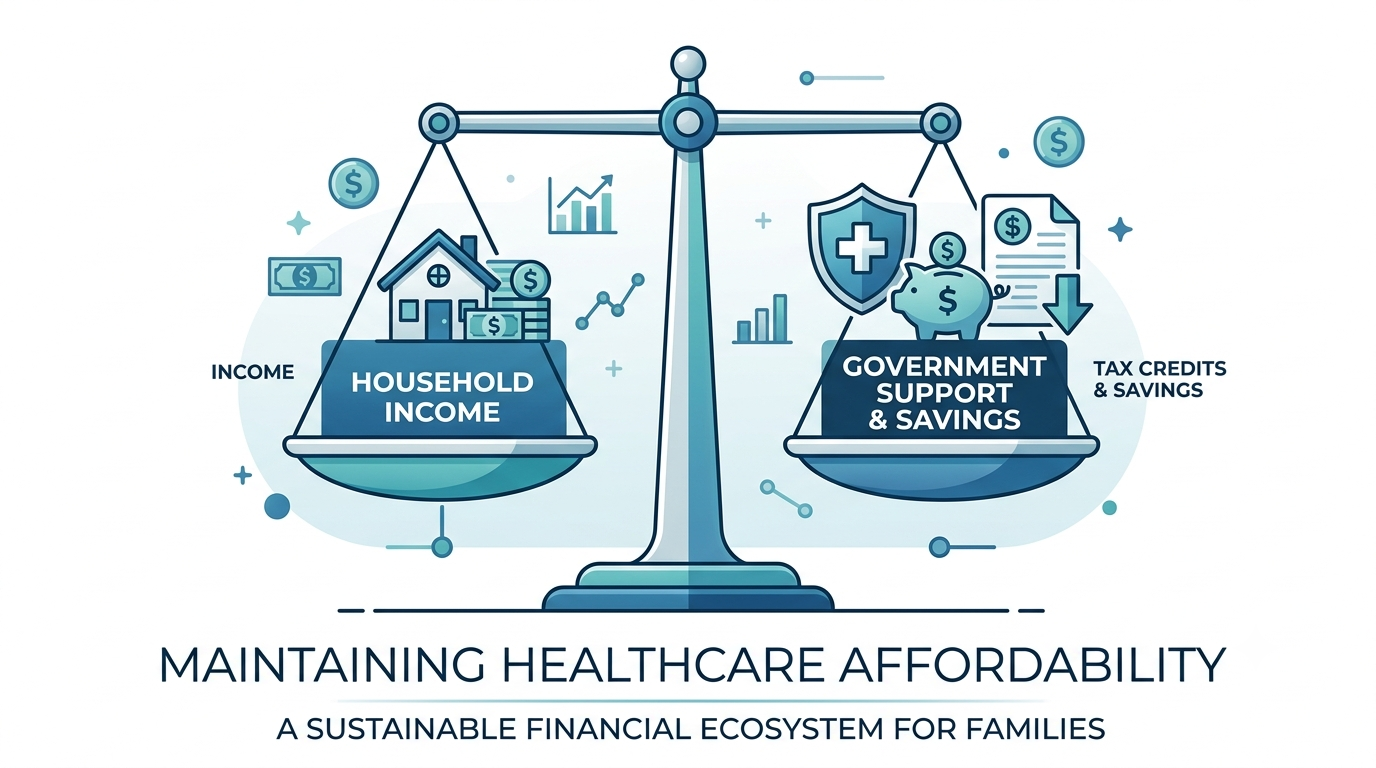
Federal Poverty Level (FPL) income thresholds determine your eligibility for Premium Tax Credits and Cost-Sharing Reductions.
Eligibility for ACA health insurance subsidies depends primarily on your Modified Adjusted Gross Income (MAGI) and your total household size compared to the Federal Poverty Level (FPL).
Federal Poverty Level (FPL) Thresholds for ACA Eligibility
Household Size |
100% FPL (Min. Eligibility) |
150% FPL (Max Subsidy) |
250% FPL (CSR Limit) |
400% FPL (Standard PTC Cap) |
1 Person |
$15,060 |
$22,590 |
$37,650 |
$60,240 |
2 People |
$20,440 |
$30,660 |
$51,100 |
$81,760 |
3 People |
$25,820 |
$38,730 |
$64,550 |
$103,280 |
4 People |
$31,200 |
$46,800 |
$78,000 |
$124,800 |
How Income Levels Affect Your Savings:
-
Below 100% FPL: In states that expanded Medicaid, you may qualify for free or low-cost Medicaid coverage rather than Marketplace subsidies.
-
100% – 150% FPL: You qualify for maximum Premium Tax Credits, often yielding $0 or near-$0 monthly premiums for Silver plans with heavily reduced deductibles.
-
150% – 250% FPL: You qualify for significant tax credits plus Cost-Sharing Reductions (CSR) if you select a Silver plan.
-
250% – 400% FPL: You qualify for sliding-scale Premium Tax Credits that cap your required insurance contribution to a fixed percentage of your annual income.
-
Above 400% FPL: Under current regulations, you may still qualify for subsidy caps if the cost of the benchmark Silver plan exceeds 8.5% of your total household income.
🛡️ Understanding the 4 ACA Metallic Plan Tiers

The four ACA metallic plan tiers—Bronze, Silver, Gold, and Platinum—offer different splits between monthly premiums and out-of-pocket medical costs.
When shopping for Marketplace coverage, plans are grouped into four main metallic categories based on how costs are split between you and your insurance provider:
| Plan Tier | Premium | Deductible & Out-of-Pocket | Cost Split |
| Bronze | Lowest | Highest | 60% / 40% |
| Silver | Moderate | Best Value + CSR Eligible | 70% / 30% |
| Gold | High | Low | 80% / 20% |
| Platinum | Highest | Lowest | 90% / 10% |
1. Bronze Plans
-
Cost Split: Insurance pays ~60%, you pay ~40%.
-
Best For: Healthy individuals who rarely visit the doctor and only want catastrophic protection against severe illness or major injury.
-
Pros & Cons: Lowest monthly cost, but very high deductibles.
2. Silver Plans
-
Cost Split: Insurance pays ~70%, you pay ~30%.
-
Best For: Anyone qualifying for Cost-Sharing Reductions (CSRs) or individuals expecting routine doctor visits and prescription fills.
-
Pros & Cons: Balanced monthly fee with moderate deductibles. Unlocks maximum government savings.
3. Gold Plans
-
Cost Split: Insurance pays ~80%, you pay ~20%.
-
Best For: Individuals or families with ongoing health conditions requiring regular care, specialist care, or costly maintenance medications.
-
Pros & Cons: Higher monthly fee, but very low deductibles and copays when receiving medical services.
4. Platinum Plans
-
Cost Split: Insurance pays ~90%, you pay ~10%.
-
Best For: Individuals with major anticipated healthcare needs who want virtually no unexpected bills.
-
Pros & Cons: Highest monthly cost, but offers immediate coverage with near-zero deductibles.
🏥 10 Essential Health Benefits Guaranteed by ACA Plans
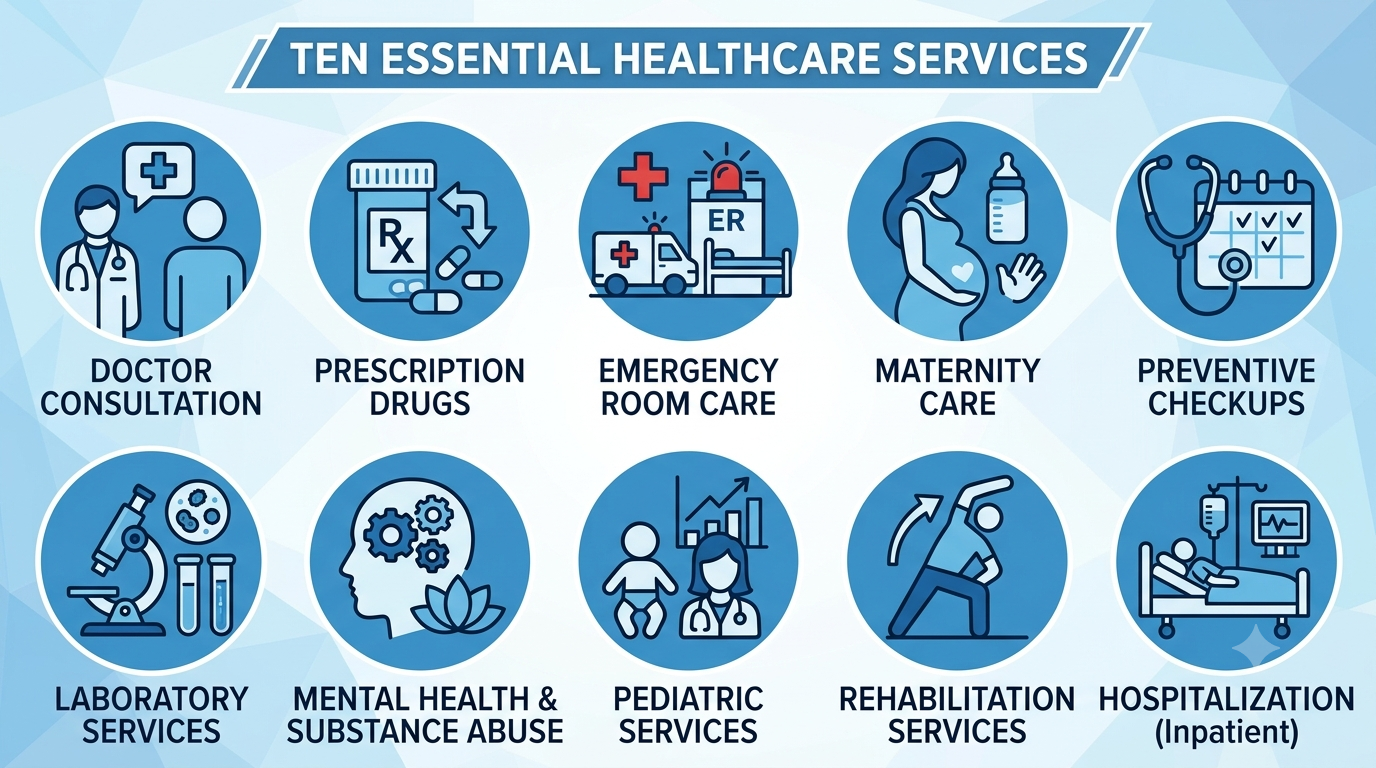
All ACA-compliant marketplace plans guarantee 10 essential health benefits, including emergency care, prescription drugs, and preventive visits.
One major benefit of securing an ACA-compliant policy is that every plan sold on the Marketplace is legally mandated to cover 10 Essential Health Benefits without annual or lifetime financial limits:
-
Ambulatory Patient Services: Outpatient medical care without hospital admission.
-
Emergency Services: Urgent care and ER visits without pre-authorization penalties.
-
Hospitalization: Inpatient care, surgeries, and overnight hospital stays.
-
Maternity and Newborn Care: Care provided before, during, and after childbirth.
-
Mental Health & Substance Use Disorder Services: Counseling, therapy, and inpatient treatment.
-
Prescription Drugs: Essential generic and brand-name pharmaceutical coverage.
-
Rehabilitative & Habilitative Services: Physical therapy, devices, and injury recovery.
-
Laboratory Services: Blood tests, diagnostic imaging, and screenings.
-
Preventive & Wellness Services: Free annual physicals, immunizations, and cancer screenings.
-
Pediatric Services: Health coverage for children, including mandatory dental and vision care.
🎯 [ACTION REQUIRED] Ready to Secure Comprehensive ACA Coverage?
Don’t wait for unexpected emergency expenses to drain your savings. Compare top-rated ACA marketplace plans with guaranteed essential health benefits today.
👉 Explore In-Network ACA Plans on InsuranceQuote.cloud
📅 When Can You Apply for ACA Health Insurance?

Ensure you apply during the annual Open Enrollment Period or qualify for a 60-day Special Enrollment Period after a major life event.
To get covered through an ACA marketplace plan, you must apply during specific enrollment windows:
1. Annual Open Enrollment Period (OEP)
The official national Open Enrollment window runs every year from November 1 through January 15.
-
Enroll by December 15 for coverage starting January 1.
-
Enroll between December 16 and January 15 for coverage starting February 1.
2. Special Enrollment Period (SEP)
If you missed the standard Open Enrollment deadline, you can still buy health insurance if you experience a Qualifying Life Event (QLE). An SEP grants you a 60-day window to pick a new policy. Common Qualifying Life Events include:
-
Loss of employer-sponsored health insurance or losing COBRA coverage.
-
Moving to a new state or ZIP code with different plan availability.
-
Major family changes: Marriage, divorce, birth, or adoption.
-
Aging off a parent’s health insurance policy at age 26.
-
Losing eligibility for Medicaid or CHIP.
📝 4 Steps to Find and Enroll in the Right ACA Plan
Follow these straightforward steps to secure the optimal balance between price and protection:
Step 1: Estimate Your Annual Household Income (MAGI)
Calculate your projected household MAGI for the upcoming coverage year. Be sure to include income from wages, self-employment, tips, dividends, and social security benefits. Accurate income estimates ensure you receive the exact tax credit you deserve without owing money at tax time.
Step 2: Determine Your Preferred Doctor Network (PPO vs. HMO)
Check if your preferred doctors, hospitals, and specialists are inside the plan network:
-
HMO (Health Maintenance Organization): Requires selecting a Primary Care Physician (PCP) and obtaining referrals for specialists. Offers lower monthly premiums.
-
PPO (Preferred Provider Organization): Allows you to visit any doctor or specialist without a referral, though staying in-network saves money.
Step 3: Compare Total Out-of-Pocket Costs
Do not judge a plan by its monthly price tag alone. Factor in the deductible (what you pay before insurance kicks in), copays (fixed fees per visit), and the out-of-pocket maximum (the absolute most you can pay in a calendar year).
Step 4: Use a Real-Time Quote Comparison Engine
Instead of manually navigating multiple carrier websites, utilize unified comparison platforms to review side-by-side rates, subsidies, and benefit details simultaneously.
❓ Frequently Asked Questions (FAQs About ACA Subsidies)
Q1: What happens if my income changes during the year?
If your household income increases or decreases during the year, you should immediately update your Marketplace profile. Adjusting your income prevents you from either under-utilizing tax credits or facing a tax liability reconciliation when filing your federal tax return.
Q2: Can Green Card holders or non-citizens qualify for ACA subsidies?
Yes! Lawfully present immigrants (including Permanent Residents / Green Card holders, work visa holders, and refugees) are eligible to purchase ACA Marketplace plans and receive subsidies, even if their income falls below 100% FPL in states without Medicaid expansion.
Q3: What is the penalty for not having ACA health insurance?
While the federal tax penalty for not having health insurance was reduced to $0 at the federal level, several states (including California, Massachusetts, New Jersey, Rhode Island, and Washington D.C.) enforce individual state-level mandates with tax penalties for remaining uninsured.
Q4: Are ACA plans better than private short-term health insurance?
In most cases, yes. Short-term private plans often exclude pre-existing conditions, do not guarantee maternity or prescription drug coverage, and set annual benefit caps. ACA plans guarantee coverage regardless of past health history.
🏁 Conclusion: Take Control of Your Health Insurance Costs Today
Finding affordable ACA health insurance with maximum subsidies is completely achievable when you understand your options. By reviewing federal poverty income limits, choosing the proper metallic tier (especially Silver plans with CSR savings), and applying during your eligible enrollment window, you can protect both your well-being and your bank account.
Stop guessing your health insurance rates. Take 2 minutes to calculate your exact subsidy savings and compare top-rated plans tailored specifically to your family’s budget.
👉 Click Here to Get Your Free ACA Health Insurance Quote on InsuranceQuote.cloud